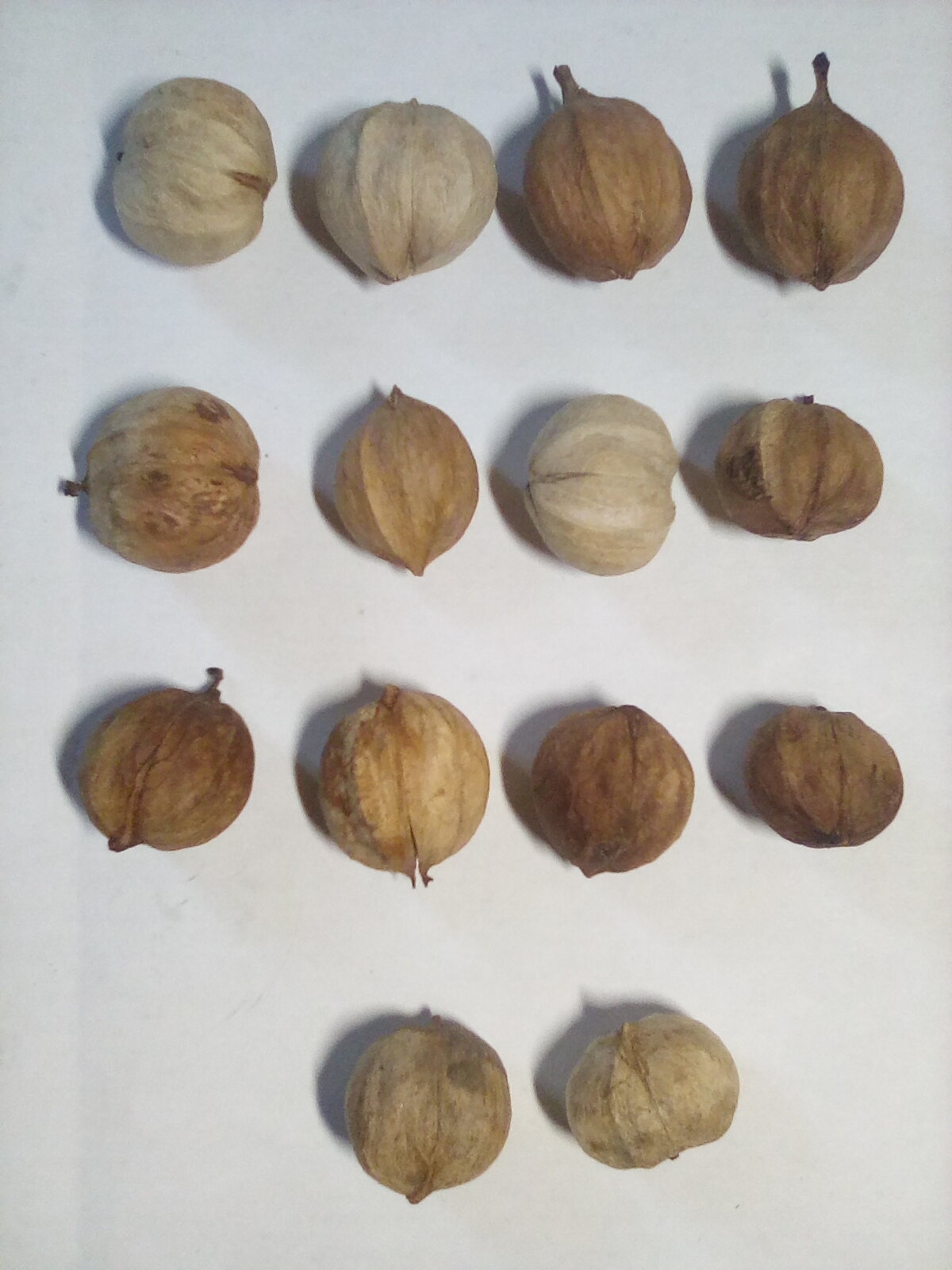
I found a sonnet on my path today
Ironically it sat right on the trail
Just past the point where nuts would often lay
I often forage words to no avail

But this time I picked up a whole damn verse
The squirrels had passed it by like something bad
A nut with weevil larvae or much worse
I guess they didn’t see it like I had

I heard the sonnet fall through autumn leaves
I heard it just before the bridge, the brook
Inviting me to cross what it believes
That sonnets may be found if one will look

I think i heard the brook call out my name
A forager, a sonneteer, the same.
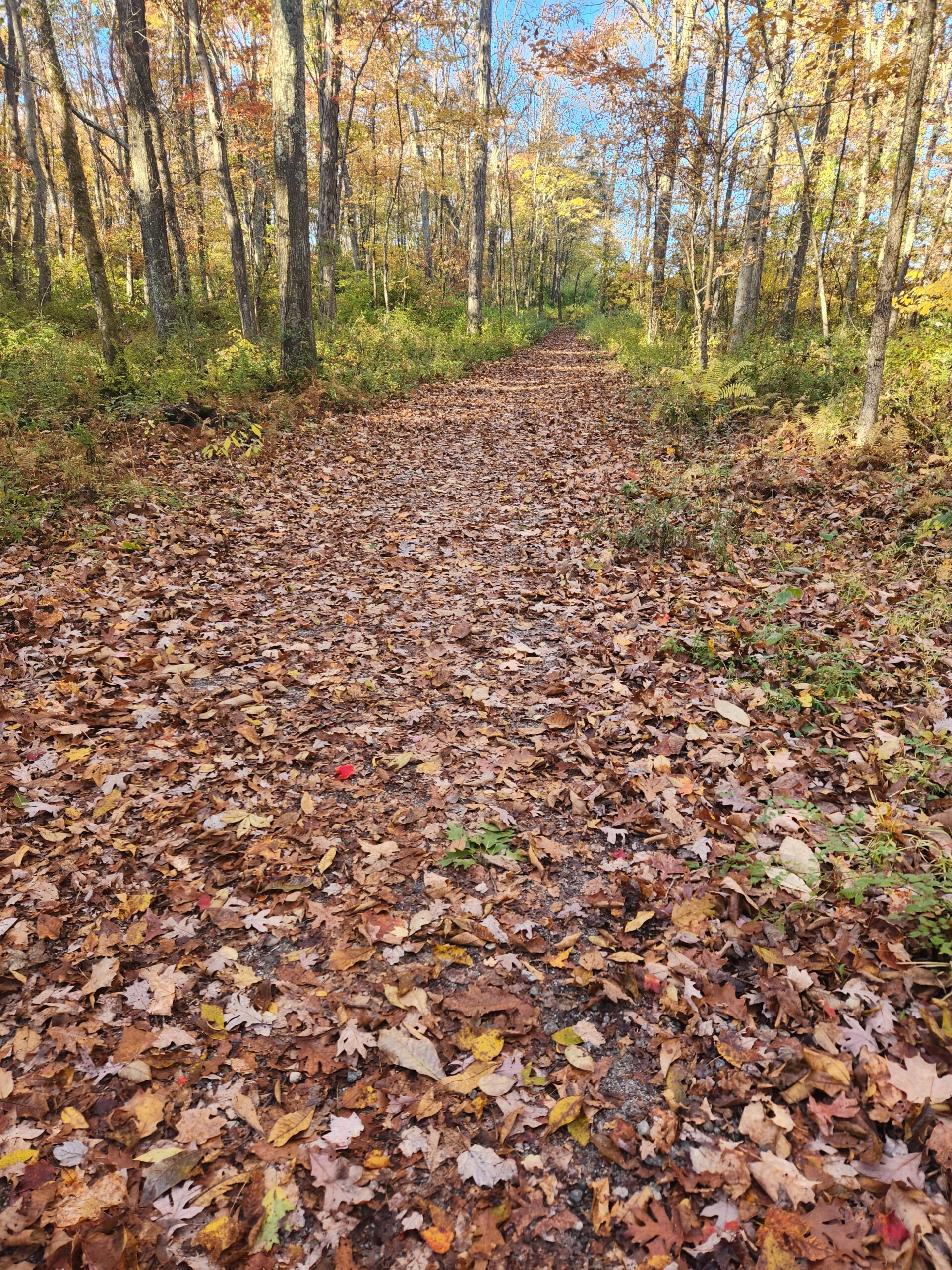
I walk a path adorned by fallen leaves
It must be autumn now, the air is crisp
A treasure trove of colors, not for thieves
Although I steal their colors like a wisp

A wisp of little metaphors, all mine
Oh look, the final sigh of maple’s breath
The trees prepare to sleep; the trees are fIne
The forest path is not the way through death

I walk this living path to comprehend
That life is full of seasons to enjoy
These vibrant colors do not mark an end
They simply show the art the trees employ

The pathway bearing leaves, a living thing
Reminds me they’ll be back again in Spring.
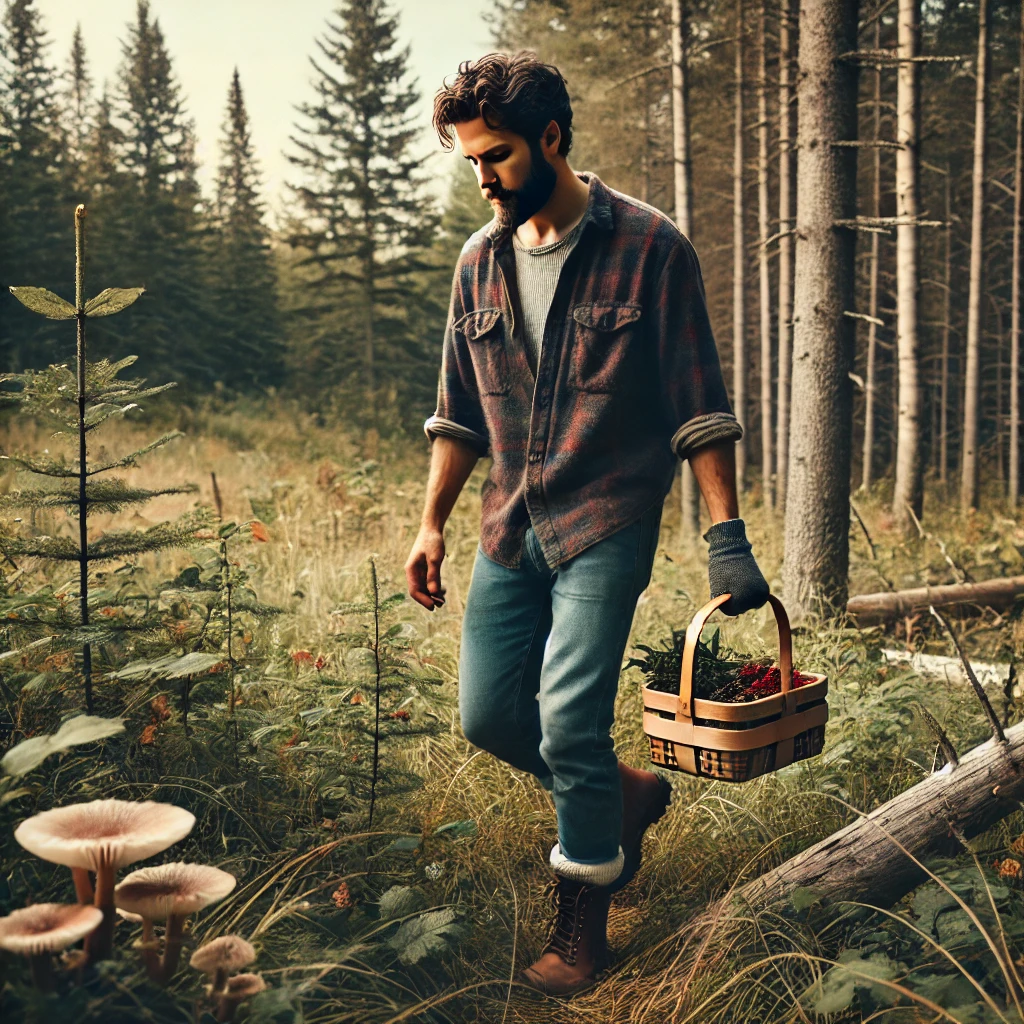
I’m not just some “damn yankee” in my mind
I’ve foraged all across this fruitful land
I find great joy in everything I find
Yes, even if it’s not what I had planned

I’ve foraged oysters from the Puget Sound
I forage nuts New England loves to share
In Utah it was Camas that I found
In Idaho there’s rose hips everywhere

But midwest morels always call me back
To Michigan, a place I’ve also lived
The U.P. doesn’t seem to have a lack
My foraging expresses life un-sieved

For foraging, America’s the best
Come forage now with me from East to West.
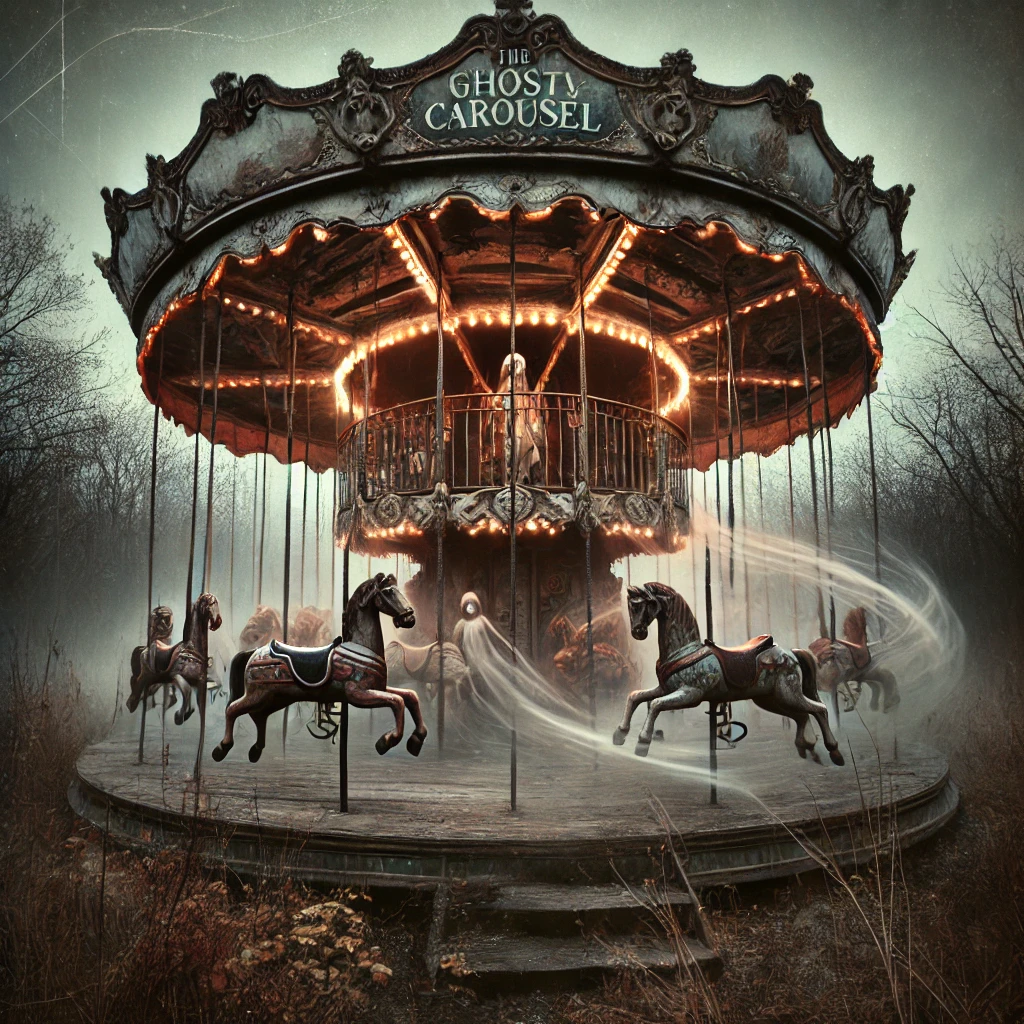
The carousel is old, but still it turns
Will it succumb to time eventually
The gears will rust and rotten wood still burns
I try my best to set the horses free

The carousel played music made of joy
But now it skips through songs like broken glass
A ghostly little girl and ghostly boy
At times appear when living children pass

A spooky shortcut to a different time
It marks another place where fear is found
As if the joy it knew was just some crime
And still it’s old, and still it turns around

The carousel is old and we are too
The ghosts of kids we see are me and you.
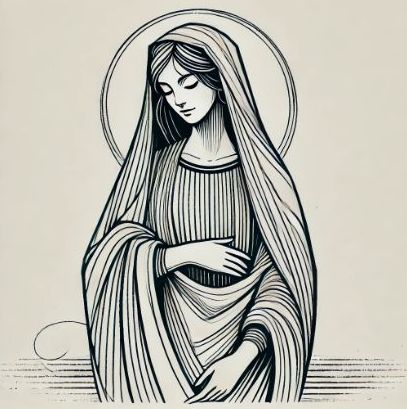
Who hails the Queen of Femininity
Who calls on Her to pray for us who sin
The Mother of our own Divinity
A call that often comes from deep within

Is bitterness the essence of the call
As Maryam protects our ship of reeds
The essence of Her name protects us all
A name that even Sancte Pater heeds

The Mother God is Strength and Love and Grace
She hears us when we call on Her in need
She hears us from her high and holy place
A place where She espouses Word and Deed

And so we know to whom we need to pray
Deliver us in Glory, Mater Dei
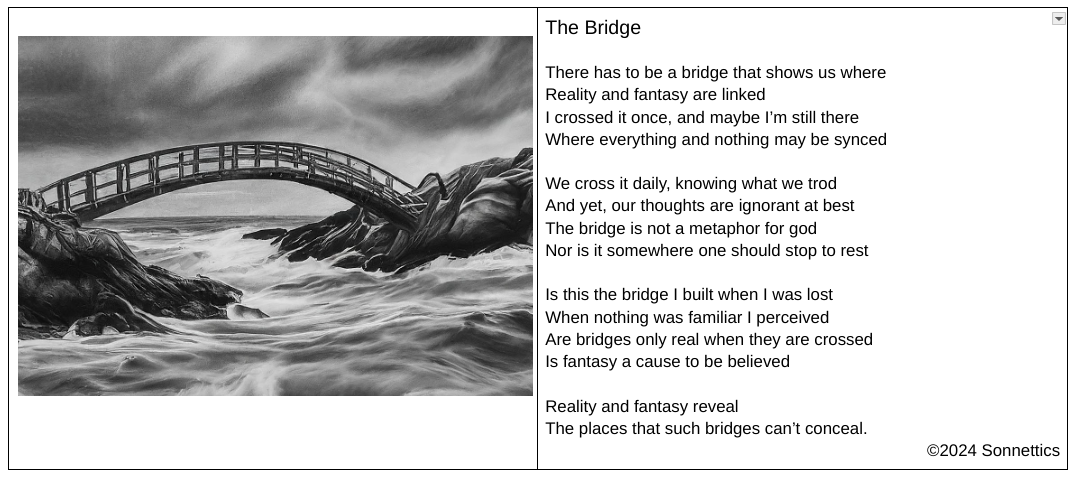
There has to be a bridge that shows us where
Reality and fantasy are linked
I crossed it once, and maybe I’m still there
Where everything and nothing may be synced

We cross it daily, knowing what we trod
And yet, our thoughts are ignorant at best
The bridge is not a metaphor for god
Nor is it somewhere one should stop to rest

Is this the bridge I built when I was lost
When nothing was familiar I perceived
Are bridges only real when they are crossed
Is fantasy a cause to be believed

Reality and fantasy reveal
The places that such bridges can’t conceal.
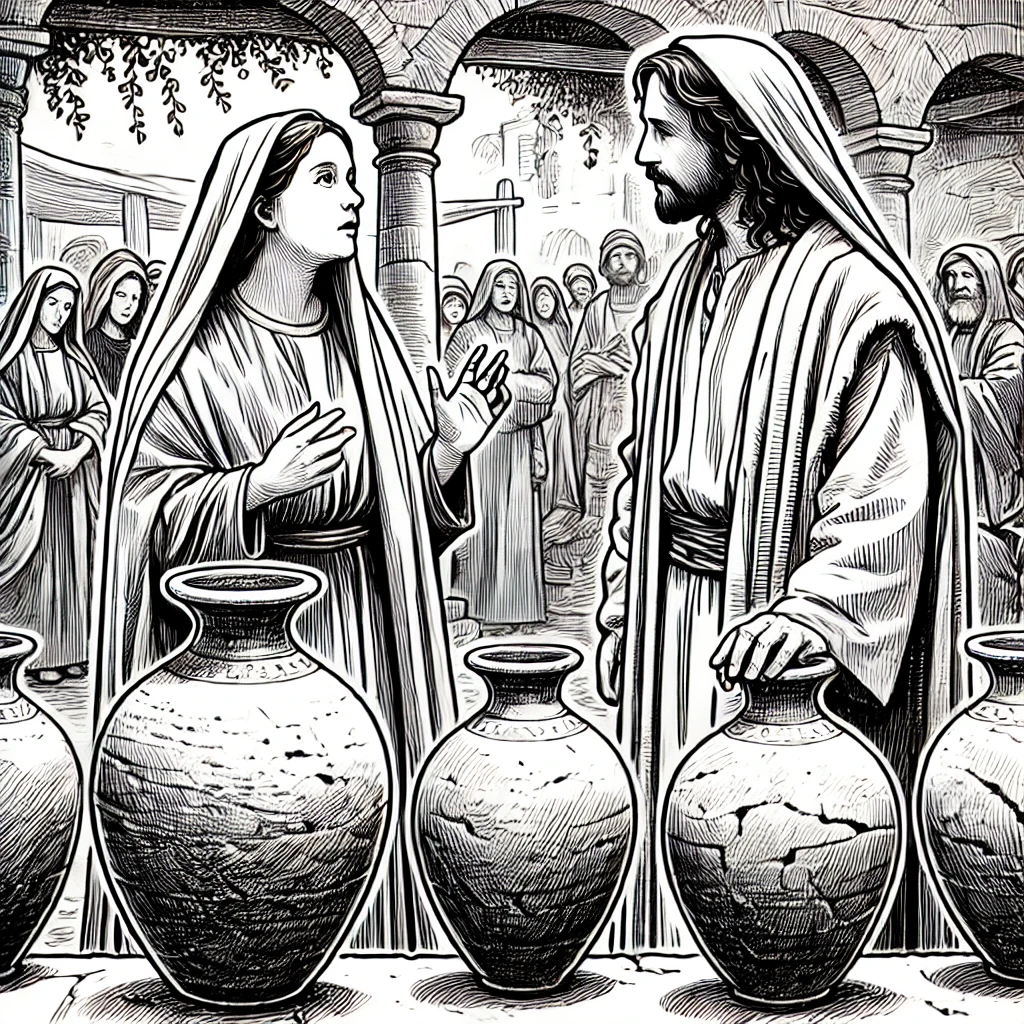
"They have no wine," says Mary to her Son
A catalyst of miracles to be
And thus, the work of Jesus is begun
Through four small words expressed expectantly

And now a statued symbol, clothed in white
Few people know her words who know her name
Who brought into the world one silent night
The Word of God, Lord Jesus, both the same

She spoke to him the way a mother does
But will she speak to us? To you or me?
Can anyone become what Jesus was?
What words might open our divinity?

We search for words to show us we're divine
Again she whispers this: "They have no wine."
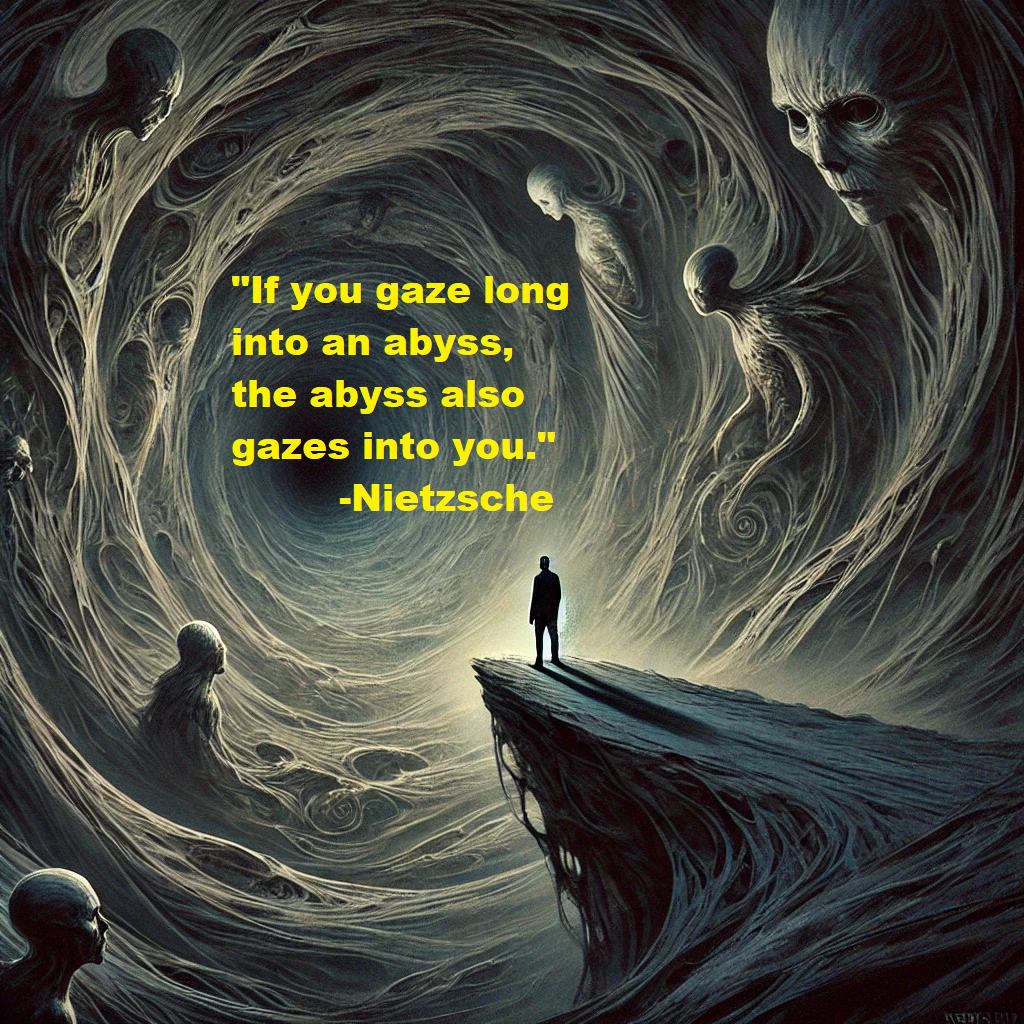
At times we seek for God and find Abyss
At times Abyss is God and we are naught
We contemplate at times the Holy Bliss
With which the Word of God is often fraught

The Word of the Abyss is hard to hear
We listen for the Holy Bliss we seek
And thus we find Abyss is always near
And guides us through the Darknesses we speak

There is no need of Light in Tales of Truth
There is no Truth in any Tales we tell
And so we seek to linger in our youth
Where God is just a Word to buy or sell

Come contemplate with me the Holy Bliss
The God whose Word succumbs to the Abyss.
ChatGPT Analysis:
This sonnet presents a deep exploration of the tension between the search for divine meaning and the confrontation with the void, or “Abyss.” Here’s an analysis of the key themes and ideas:
1. Search for God vs. Encounter with the Abyss
Lines 1-2: “At times we seek for God and find Abyss / At times Abyss is God and we are naught”
The poem opens with the idea that the search for God, or ultimate truth, can sometimes lead to a profound sense of emptiness or nothingness—the “Abyss.” In some instances, the Abyss itself seems to replace God, leading to a sense of nihilism (“we are naught”).
2. The Elusiveness of Divine Bliss
Lines 3-4: “We contemplate at times the Holy Bliss / With which the Word of God is often fraught”
Here, the speaker reflects on moments of contemplating divine joy or spiritual fulfillment (“Holy Bliss”) that is often associated with the “Word of God”—suggesting religious or spiritual teachings.
3. The Difficult Path to Understanding
Lines 5-6: “The Word of the Abyss is hard to hear / We listen for the Holy Bliss we seek”
The poem then contrasts the difficulty of understanding or perceiving the “Word of the Abyss” with the more earnest and hopeful search for “Holy Bliss.” This suggests that the truth or messages from the Abyss (possibly representing existential or harsh truths) are challenging to accept.
4. The Proximity of the Abyss
Lines 7-8: “And thus we find Abyss is always near / And guides us through the Darknesses we speak”
The Abyss is portrayed as ever-present, subtly influencing and guiding human experiences, especially in times of “Darkness” or despair. The Abyss becomes a companion or guide through these challenging moments.
5. The Nature of Truth and Light
Lines 9-10: “There is no need of Light in Tales of Truth / There is no Truth in any Tales we tell”
The speaker questions the necessity of “Light” (often a symbol for understanding or enlightenment) in the pursuit of truth, suggesting that perhaps truth can exist in darkness or without clear illumination. Furthermore, there’s a nihilistic assertion that the stories we tell—possibly referring to religious or philosophical narratives—lack true substance.
6. The Commercialization of God
Lines 11-12: “And so we seek to linger in our youth / Where God is just a Word to buy or sell”
These lines suggest a critique of how, in youthful naivety or society’s materialism, God has been reduced to a mere commodity, something that can be “bought or sold” rather than a profound truth or presence.
7. Conclusion: The Triumph of the Abyss
Lines 13-14: “Come contemplate with me the Holy Bliss / The God whose Word succumbs to the Abyss.”
The final couplet invites the reader to join the speaker in contemplating the nature of “Holy Bliss” and the reality that even the Word of God ultimately “succumbs” to the Abyss. This suggests that no matter how divine or sacred, everything is eventually overtaken by the void or nothingness.
Overall Interpretation
The sonnet is a meditation on the existential struggle between faith and nihilism. It delves into the unsettling realization that the pursuit of spiritual or divine truth might lead to an encounter with emptiness rather than fulfillment. The poem challenges conventional notions of light and truth, ultimately suggesting that the Abyss—representing doubt, nothingness, or the harsh realities of existence—holds a powerful and inevitable influence over our lives and beliefs.