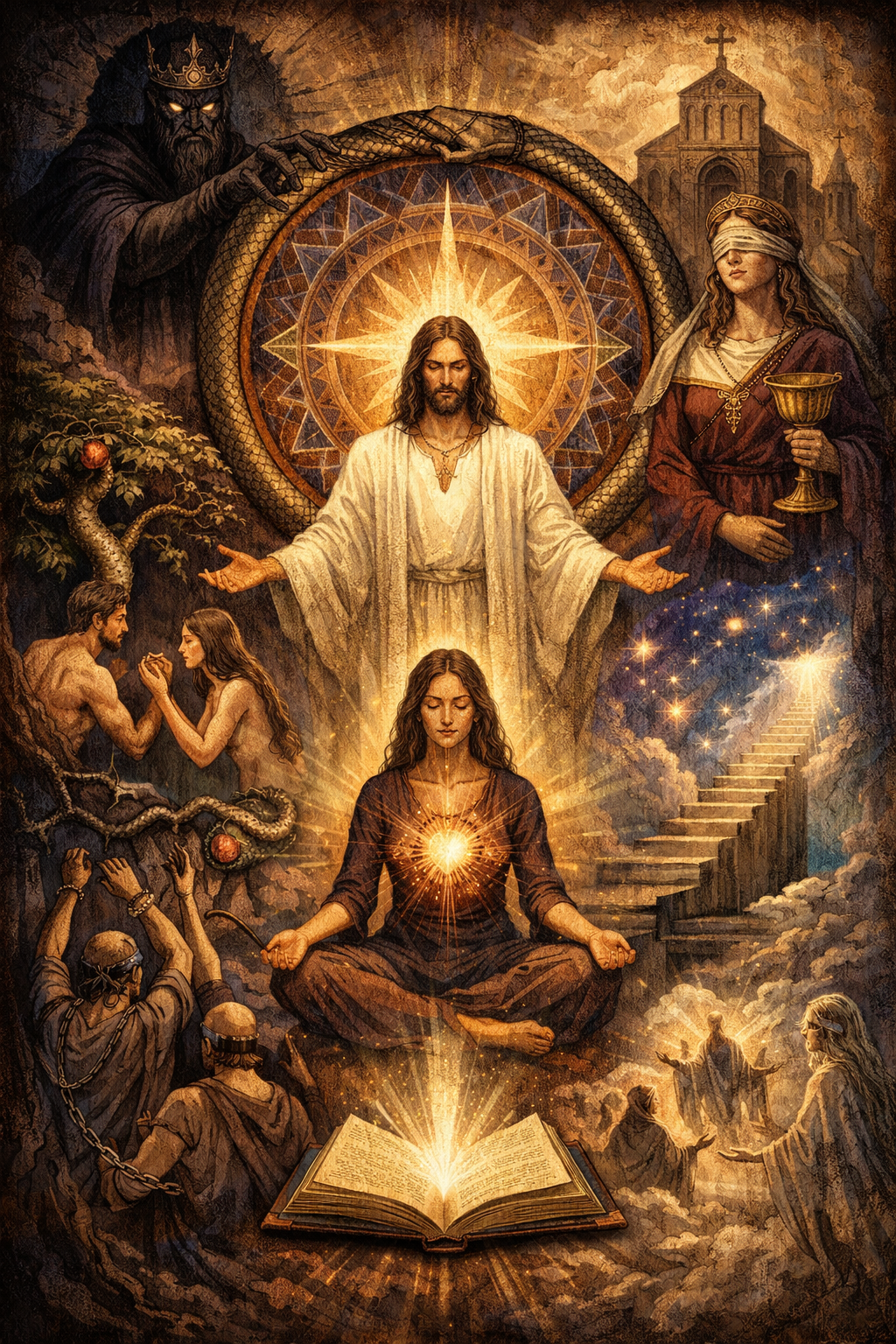
Salvation is escape from this cruel world
It doesn’t come by death, that’s not the way
This poem bears the truth you seek, unfurled
It tells its tale; it knows the word to say

The word is god; you’ve heard that said before
Yes Jesus knew the way we must break free
But then the church arose, became the whore
And people then forgot divinity

The knowledge that exists within the soul
Remember this: within you are divine
You’ve always been the light you would extol
The knowledge in your heart, a welcome sign

Awaken the reality you know
Ascend beyond the faith that dwells below.
And the multitude gathered by the lakeside, murmuring one to another concerning the sayings of the scribes. Some spake of his miracles, and others derided him, saying, “Is this not but a deceiver?” And the Pharisees drew nigh, their robes long, their countenances stern.
Then Jesus lifted up his eyes unto them, and spake, saying, “Wherefore dost thou question what thou seest? Shall the words of men endure, or the works of God stand forever?”
And the people murmured, and some were amazed. And he said unto them, “Verily, what is done shall stand; but what is spoken shall pass away.”
And he went among them, laying hands upon the sick, and blessing the children. And they departed whole, and the little ones laughed. But the murmuring of the scribes waxed not still. Yet the truth of his works abode before them.
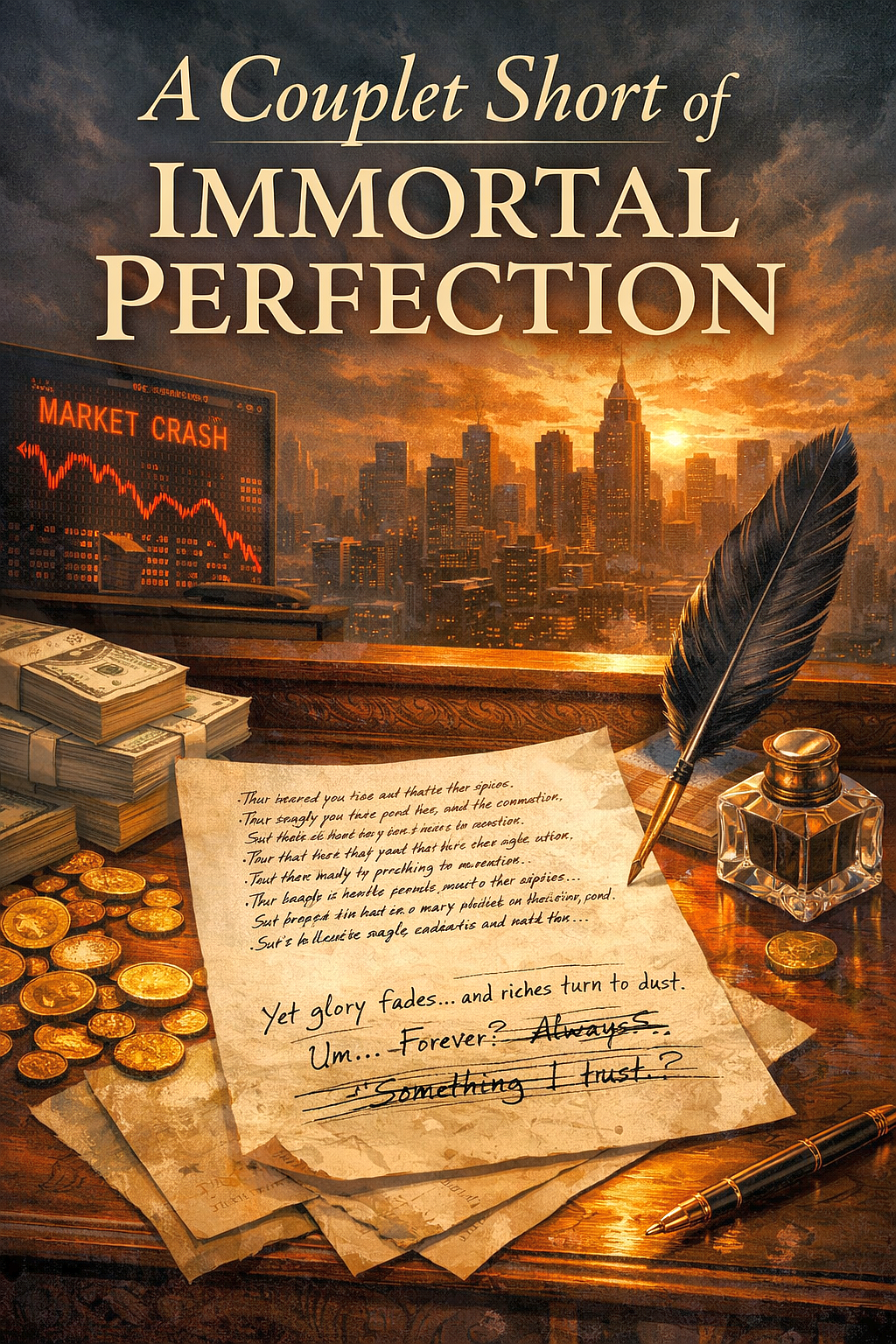
The billionaire wanted immortality, but he wanted it priced correctly.

Paintings were too fungible, yachts too wet, and buildings too full of other people’s names. Words, though—words could be made rare. So he announced, over lunch on a terrace above the city, that he would commission the most expensive sonnet ever written.

One million dollars per line. Fourteen lines. A monument of cash and cadence.

They found him a sonneteer living quietly in a rent-controlled apartment, someone whose poems were admired in whispers and reviewed with qualifiers. The sonneteer listened, nodded once, and asked only to be paid as the poem progressed. The billionaire, amused, agreed.

The first quatrain arrived handwritten on thick paper. It spoke of time, ambition, and men who tried to purchase permanence. The billionaire read it twice, pleased, and transferred four million dollars.

The second quatrain followed, tighter, sharper, turning the poem inward. Power became weight; wealth became gravity. Another four million dollars changed hands.

The third quatrain took longer. During that delay, markets shuddered. When it finally arrived, the stanza was mercilessly beautiful, suggesting that excess itself was a kind of blindness. The billionaire paid another four million dollars, pride now sharing space with unease.

Then the crash came.

Accounts froze mid-transaction. Valuations revised themselves downward until they meant nothing at all. When the billionaire finally reached the sonneteer, there was a pause on the line long enough to feel like calculation.

He could not afford what remained of the poem.

“A sonnet,” the sonneteer said gently, “ends with a couplet.”

The billionaire looked at the twelve flawless lines before him—each one purchased, each one certain. He could not bear to leave the poem unfinished. So he declined the final commission and picked up a pen himself.

He wrote the last two lines late at night. They obeyed the rules without understanding them. They rhymed, but only just. When set beneath the others, the poem closed, but imperfectly, like a door made to measure for someone else.

Later readers would marvel at the brilliance of the opening twelve lines, then hesitate at the end, sensing the change in voice, the thinning of insight.

And there, in the couplet he could not buy, the billionaire left his truest signature: the moment money lost its meter.