A Historical Novella (c. 33–65 CE)
Part I – The Road Back to Galilee
The road north from Jerusalem wound through pale limestone hills, quiet except for the occasional bleating of sheep and the distant clack of a caravan’s harness. Mary walked with steady purpose, her sandals raising tiny clouds of dust. Behind her, Jerusalem shimmered in the late-spring light—beautiful, but heavy, a city still tense with the memory of Passover, of soldiers, of shouts around a cross.
She did not leave in fear. She had walked unafraid through darker nights. But the city’s air pressed on her chest: the anxious whispers in the upper room, the debates about law and table and Gentiles, the arguments among the men about who should interpret what he said. It was time to return home, to Galilee, to the place where she had first followed him. To the sea that smelled of salt and the nets drying in the sun. To Magdala.
She carried little: a wool cloak, dried figs, and a small pouch of coins given by Joanna, who had embraced her with tearful affection before Mary slipped out of the city gate. “You will write to us,” Joanna said, “or send word by a traveler.”
“If the roads allow,” Mary replied.
There was safety in anonymity. To Rome, she was no one. To the Temple authorities, she was less than no one—a woman from Galilee who could easily be dismissed. Only within the small, growing circle of Jesus-followers did she hold the strange and heavy honor of being the first to see him alive. An honor that made her both essential and uncomfortable.
The road tightened between hills and olive groves. She walked on.
Part II – The House by the Shore
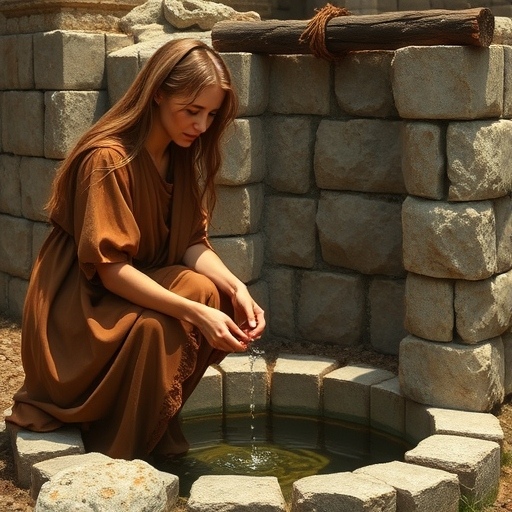
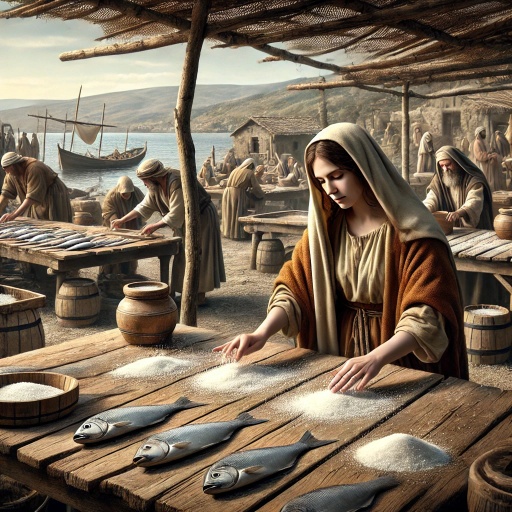
The scent of the lake reached her before the water came into view—fresh, mineral, alive. The Sea of Galilee glimmered in the sun like a sheet of hammered bronze. It had been years since she last saw her hometown, but Magdala had changed little. Fishermen still called out to one another as they hauled in their nets. Women scrubbed fish scales from wooden tables. Children ran barefoot across the packed earth.
Mary’s family house stood near the outskirts, its walls whitewashed but weathered. Her older sister, Leah, opened the door, stared for a heartbeat too long, then pulled Mary into her arms.
“You’re thin,” Leah said, stepping back to study her. “Jerusalem takes from people.”
“Sometimes it gives,” Mary said softly. “And sometimes it wounds.”
They sat inside while Leah prepared lentils and bread. A warm breeze moved through the reed-slat window. Mary watched it ripple the surface of the water in the distance. How many mornings had she sat on this same floor, unaware her life would shift into something vast and uncontainable?
When the meal was done, Leah hesitated. “I’ve heard stories,” she said carefully. “About Jesus of Nazareth. Stories that you—”
“That I followed him?” Mary finished. “Yes.”
“That you… saw him after he died?”
Mary nodded, though she sensed her sister’s struggle—not disbelief, but the fear of stepping into a mystery too large for the world she knew.
“I cannot explain what happened,” Mary said. “I can only say it was real, and I cannot forget it.”
Leah reached for her hand, a gesture of acceptance more than understanding.
“You may stay here as long as you wish,” she said.
Part III – The Gathering
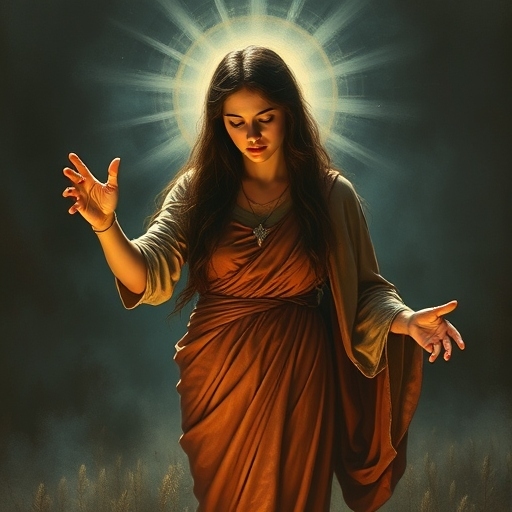
Mary did not intend to begin hosting gatherings in Magdala. It happened slowly, almost accidentally.
First came Mara, a young widow from Capernaum who had heard rumors that Mary had traveled with the Galilean healer. She arrived carrying a jar of olives and a timid request: “Tell me about him.”
So Mary told her—about the crowds pressing along the lake shore, about the parables that unfolded like seeds in the mind, about the way he saw people, really saw them. Mara returned the next evening with two neighbors.
Then a fisherman’s wife came, saying she remembered a rabbi who spoke on the hillside years earlier. A local merchant followed, curious about the growing gatherings. Soon Mary found herself arranging stools and mats in the courtyard while Leah roasted barley and herbs for the guests.
They shared meals, told stories, prayed, listened. Mostly they listened.
Mary did not preach. She had no desire to assume authority. But the people asked questions that no one else could answer: What was he like? What did he truly mean about mercy, about the kingdom, about forgiveness? So she spoke plainly, letting memory settle into words.
At first, they asked about miracles. Later, they asked about the man—his laugh, his patience, the ache in his voice when he spoke of Jerusalem’s future.
“Did he… love you?” Mara asked one evening as the lamps flickered low.
Mary smiled softly. “He loved everyone he met. But not in the ways people try to imagine.”
Mara nodded, though Mary sensed the question behind the question. People wanted to locate Mary within a story—disciple, companion, wife, leader. But she resisted titles. They were too small.
She was a witness. That was enough.
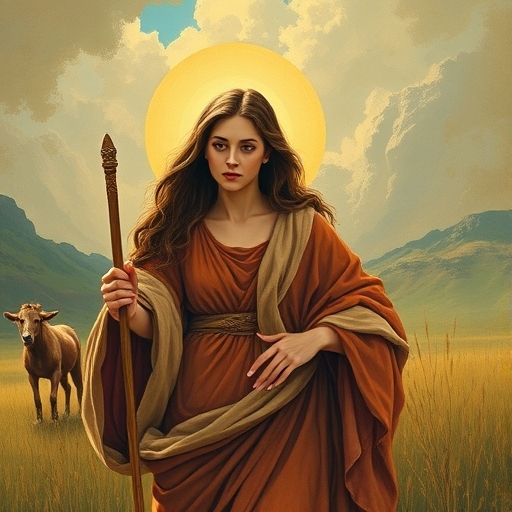
Part IV – Tensions Rising
As seasons passed, Galilee grew restless.
Roman taxation tightened. The zealot movements gained quiet followers. Bandits roamed the hills posing as freedom fighters. On market days, the talk among fishermen turned dark—rumors of uprisings, of arrests, of brutality in nearby villages.
Mary tried to keep the little gathering apolitical. The message she carried was not about Rome or revolt. It was about the dignity of the poor, the healing of wounds, the hope that the world could be remade beginning in the human heart.
But not everyone in Magdala welcomed the gatherings.
One afternoon, a Pharisee named Eleazar visited. He stood in Mary’s courtyard, inspecting the group with wary eyes.
“I’ve heard you speak of the Nazarene,” he said. “Some say you lead a sect.”
“I lead nothing,” Mary said calmly. “We speak of Scripture and of what we have seen.”
He frowned. “Your meetings draw people away from synagogue instruction.”
“Only because they seek understanding.”
“They should seek it from those trained to teach.”
Mary held his gaze, unflinching. “The prophets were not trained in schools.”
He bristled, but said nothing more. When he left, several in the group looked uneasy.
“He could cause trouble,” Mara whispered.
Mary shook her head. “Not yet. And we will give no cause.”
Still, she became more cautious. The gatherings grew quieter, more intimate. They shared readings from the Torah and the prophets, linking them to the teachings she remembered. They ate simple meals, sang psalms, prayed for those in need.
But Mary felt the tension tightening around them, like the first subtle pull of a storm tide.
Part V – Letters from Jerusalem
Years passed. Visitors from Jerusalem came north from time to time, bringing news.
One evening, a man named Simon the Weaver arrived breathless, dusty, and shaken.
“James—Jesus’ brother—has taken leadership,” he said. “Peter travels often now, but James holds the community together. And Paul—have you heard of Paul?”
Mary shook her head.
“A Pharisee who persecuted us,” Simon said, “but now claims he saw the Lord on the road to Damascus. He travels among the Gentiles, preaching to non-Jews.”
The courtyard erupted in murmurs.
Mary’s expression tightened. “Did the Lord call him?” she asked quietly.
Simon shrugged helplessly. “He believes he was called. Many in Jerusalem welcome him. Others question him.”
Mary asked no more. It was not her place to doubt another’s experience. Yet she felt a strange unease—how easily the movement could be reshaped by voices who had never walked the dusty paths of Galilee beside Jesus.
Later, when the guests had gone, Leah found Mary sitting by the lamp.
“You worry for the future,” Leah said.
Mary nodded. “Stories change as they travel. Memories too.”
“Then keep yours alive,” Leah said. “Tell them often.”
Mary smiled sadly. “I do. But the world grows larger, and the stories scatter like seeds. Some will grow true. Others will twist.”
Part VI – The Woman and the Net
One spring morning, Mary walked along the rocky shore where the waves lapped in quiet rhythm. She liked to wander here—where she had first heard his voice years ago, where he had stepped into the boat that pushed out from shore, where the crowd leaned toward him as though drawn by gravity.
She watched a fisherman repairing his net. His daughter, perhaps ten years old, sat beside him weaving a small basket.
When the girl saw Mary, she smiled. “Are you the woman who tells the stories?”
Mary laughed. “I suppose I am.”
The girl hesitated. “Can you tell one now?”
Mary knelt beside her. “What sort of story?”
“Something about the rabbi. My mother says he healed people.”
Mary’s smile softened. “Yes. He healed many. But he also taught that the kingdom of God is like a net.”
“A net?” The girl wrinkled her nose.
“Yes,” Mary said, “cast into the sea. It draws in all kinds of fish—large and small, clean and unclean. And the sorting comes later. But while in the net, everything is held together.”
The girl looked thoughtful. “Is he still here? People say he vanished.”
Mary gazed at the horizon where the lake merged with the sky.
“He is here in a way you cannot see,” she said. “But everything he began, we must continue.”
The fisherman glanced up at her, a shadow of gratitude or understanding crossing his face.
Mary walked on.
Part VII – Famine and Fire
Around the year 46, famine struck Judea. Galilee fared better than Jerusalem, but hunger spread north nonetheless. Mary and Leah rationed their grain, and the gatherings transformed into communal kitchens. People brought what little they had—dates, fish, dried beans—and shared without counting.
“This is what he meant,” Mary said one evening as they baked bread for the village’s widows. “Food for all, without distinction.”
But famine was not the only hardship. Roman patrols increased. There were rumors of crucifixions along the road to Sepphoris, of suspected rebels executed without trial. Some in Galilee whispered of rising up; others urged caution.
Mary moved quietly through the turmoil. Her focus remained unchanged: to bind wounds, to teach mercy, to keep hope alive. She visited the sick, comforted the grieving, mediated disputes. People sought her counsel with growing regularity.
And slowly, reluctantly, Mary realized something she had resisted for years—
She had become a leader.
Not by title, not by proclamation, but by steady presence. By familiarity with suffering. By a memory that would not fade.
Part VIII – The Messenger from Ephesus
Mary was in her courtyard one warm evening when a traveler arrived bearing a scroll sealed with wax. He had walked from the coast, then inland, then north, a journey of weeks.
“It is from John,” the man said. “The one they call the disciple whom Jesus loved.”
Mary’s breath caught. She had not seen John since her last days in Jerusalem.
She broke the seal with trembling fingers.
The message was long, filled with news: the spread of Jesus-followers in Asia Minor, new communities in Ephesus and Smyrna, tensions with synagogue leaders, debates over Gentile converts. At the end, in John’s unmistakable handwriting, were these words:
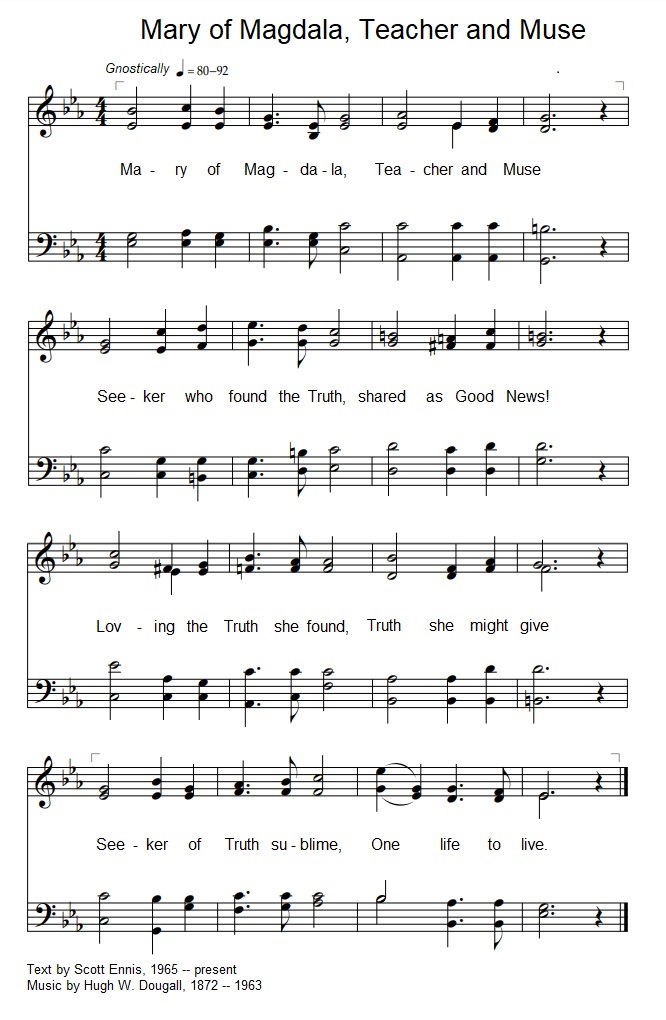
“Mary, your witness is needed still. Your memory is a lamp in an age of confusion. Whether you travel or remain, do not cease speaking what you know to be true.”
Mary closed her eyes, overwhelmed by the weight of it. The world was changing faster than she could have imagined.
“I am only one woman,” she whispered.
Leah touched her shoulder. “Then be one woman who remembers.”
Part IX – The Last Years
In her later years, Mary’s hair silvered and her steps slowed, but her gatherings continued. Children who had grown up hearing her stories brought their own children. The courtyard filled with more generations than she could count.
Her voice became gentler, her stories more distilled.
“He taught us that to be great is to serve,” she told them. “To be free is to forgive. To be whole is to love.”
People traveled from Tiberias, from Capernaum, even from the Decapolis to hear her. Some expected visions or secret teachings. Instead they found a woman who offered only truth shaped by memory:
“He saw the world as it could be. And he asked us to live as though that world were already here.”
In her final season, as unrest swelled toward open revolt, Mary sat often by the window overlooking the lake. The waves shimmered in the sun just as they had the first day she followed him.
Mara, now older herself, asked her gently, “Do you regret staying?”
Mary smiled, lines of peace settling into her face. “No. This is where the stories needed to be tended.”
She died in her sleep on a warm evening, the scent of the lake drifting through the open window. Leah washed and prepared her body. The villagers—Jews, fishermen, widows, travelers, and quiet Jesus-followers—gathered to sing psalms and remember her kindness.
They buried her on a gentle slope overlooking the Sea of Galilee, where the wind carried the sound of waves and where, in time, the memory of her life blended into the stories of those who came after.
Epilogue
Years later, long after the revolt and the destruction of Jerusalem, a traveler from the coast paused on that hillside. He had heard of a woman who walked with the Nazarene, who told stories with clarity and courage, whose memory shaped the faith of many.
He knelt in the grass, touched the stone that marked her resting place, and whispered:
“You kept the lamp lit.”
Then he rose and continued on his journey, carrying her story like a seed across the world.